


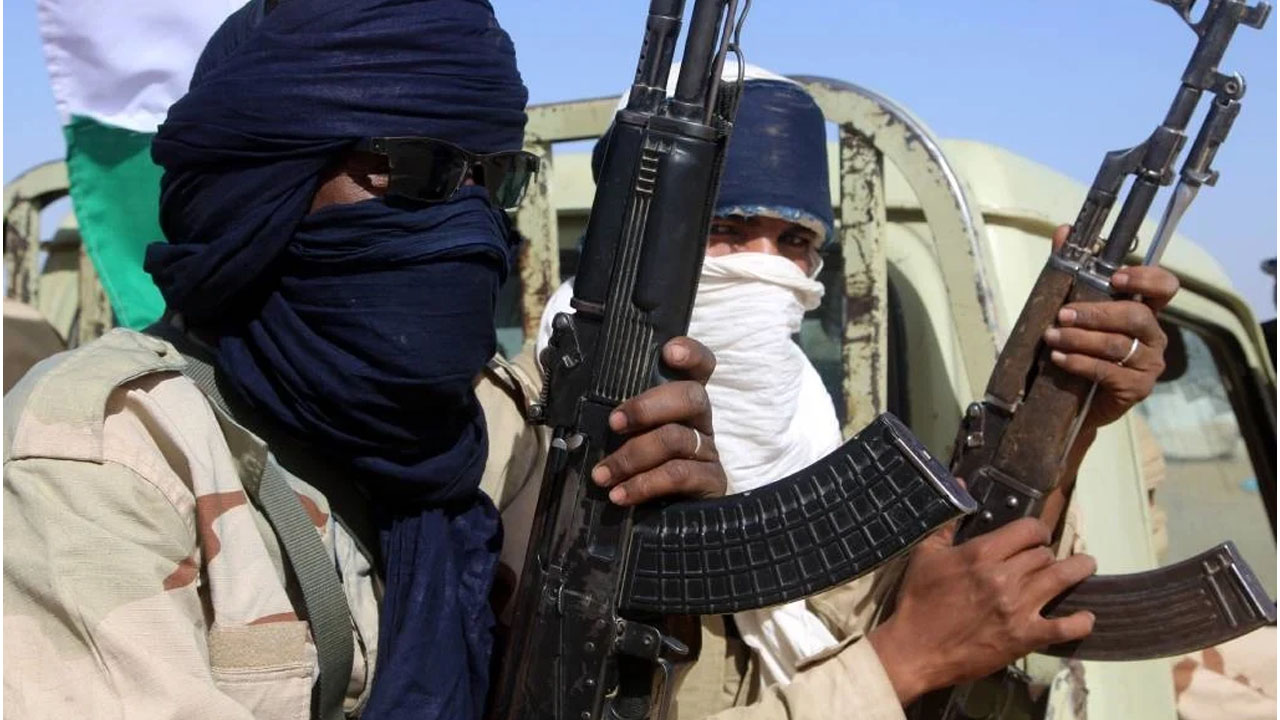
If condemnations could stop incessant killings in the country, the lamentations and pledge of action that trailed Palm Sunday’s dastardly attack in Plateau State, last week, would have prevented the ‘Bloody Easter’ that was unleashed on Christian faithful in Kaduna, Benue and Borno States yesterday.
Yesterday’s attacks came barely one week after gunmen invaded and killed defenceless citizens at Angwan Rukuba in Plateau on Palm Sunday.
After torrents of reactions by the government and security agencies, followed by the announced deployment of security operatives across many hotspots in the country to ensure an attack-free Easter celebration, nothing could stop the continuing flow of blood as more Nigerians again lost their lives to insurgent attacks.
At least 17 people were reportedly killed in an attack on Mbalom in Gwer East Local Government Area of Benue State, in the latest violence to hit the state’s rural areas.
The attack, which occurred on Sunday, coincided with Easter celebrations, with residents narrating how the gunmen stormed the community and opened fire on villagers. The Director-General of the Bureau for Homeland Security, Benue, Air Commodore Jacob Gbamwuan (rtd), confirmed the attack in the Mbalom community.
Local sources who did not want their names mentioned for security reasons said the assailants also set houses ablaze, displacing many residents, with many missing as search efforts continue. “This is heartbreaking. People were caught unawares. Many are still missing,” a resident said.
Witness accounts indicate that the attackers struck without warning, forcing families to flee into the bush as gunshots rang through the community. The latest killings have renewed concerns over persistent insecurity in parts of Benue, where farming communities have faced repeated attacks by armed groups.
In a statement issued on Sunday, Governor Hyacinth Alia condemned the attack, describing it as “heinous” and unacceptable. The statement, signed by his Chief Press Secretary, Tersoo Kula, said the governor expressed sympathy to affected families and assured residents that the government would pursue those responsible.
Alia also noted what he described as a pattern of “calculated and selective attacks” in parts of the state and pledged to strengthen security measures to prevent further violence. He commended the security agencies for their response and urged them to intensify operations to apprehend the perpetrators.
Udeme Edet, police spokesperson in Benue, confirmed the incident to newsmen on Sunday. Edet said investigations are ongoing, adding that more information would be made available when gathered.
According to reports, a security alert was issued regarding the presence of about 50 armed herders dressed in black overalls moving from Nyiti, Makurdi LGA, to Atondiir in Gwer West, where Easter celebrations were scheduled to take place. It was learnt that suspected terrorists invaded the Mbalom-Mbatsada-Agana community in Gwer Local Government Area of the state on Holy Saturday.
When The Guardian contacted the chairman of Gwer local government council, Timothy Adi, under whose jurisdiction Mbalom falls, he said that the bodies of nine victims have been found. The tenth victim, he said, was not dead but in a critical condition. Adi said that he was just leaving the hospital where the victim was receiving treatment.
Philip, a resident of Mbalom, told The Guardian that the assailants stormed the community in the early morning of Saturday but were resisted by the youths and were forced to retreat, only to return at night that same day and successfully carry out the attack. Philip said that the community had got wind of the planned attack at least four days earlier and had informed all the relevant authorities.
He said that the community, which had suffered several such attacks in the past, had reported the presence of strange armed men some days earlier, before the attack. He said that only men fell victim because they had already relocated the women and children out of the community before the eventual attack.
Similarly, terrorists attacked the Ariko community in Kachia Local Government Area of Kaduna State, targeting two Christian worship centres during Easter celebrations, killing at least seven persons and abducting several others.
The councillor representing Awon Ward, under which Ariko District falls, Mark Bawa, confirmed the attack to newsmen. According to him, the affected churches are First ECWA Church and St. Augustine Catholic Church, both located in Ariko.
Bawa added that the terrorists arrived in large numbers and operated for about an hour before fleeing into the bush with their victims. He said poor telecommunications coverage in the area may have allowed the attackers to assault their victims without immediate response.
“The attackers came in large numbers. They surrounded the area and began shooting sporadically at worshippers. Several people were killed, and many others were taken away into the bush,” he stated.
Residents said the assailants operated for a prolonged period without resistance, raising further concerns about the vulnerability of rural communities in the state. The latest attack comes barely two months after a similar incident in the Kurmin Wali community, also in Kachia LGA, where scores of worshippers were abducted during a church gathering in February 2026.
That incident sparked outrage and renewed calls for an improved security presence in Southern Kaduna.
When contacted, the Kaduna State Police Public Relations Officer, DSP Mansir Hassan, said he would provide further details regarding the tragic incident. Observers noted that the recurring attacks highlight the persistent security challenges facing rural communities in Southern Kaduna, particularly during religious gatherings and festive periods.
BUT the Nigerian Army has said its troops foiled a terrorist attack and rescued 31 civilians abducted during an Easter church service in Ariko village, Kachia LGA of Kaduna state, on Sunday.
In a statement issued on Sunday evening, the army said the troops received a distress call reporting the abduction of worshippers at an ECWA Church in Ariko village during the Easter service.
“The troops, on receipt of the information, promptly mobilised to the scene. With the support and guidance of members of the Ariko community, they advanced in pursuit of the fleeing terrorists and engaged the criminals in a fierce firefight, overwhelming them with superior firepower,” the statement reads.
“The pressure mounted by the advancing troops forced the terrorists to abandon 31 hostages, including one injured victim who is currently receiving medical attention.”
The army added that the troops also recovered the remains of five victims already killed by the terrorists before fleeing into the forest.
“Troops have since intensified pursuit operations to track the fleeing elements to their enclaves, with ongoing efforts aimed at rescuing any remaining captives and ensuring the perpetrators are brought to justice. To consolidate the gains recorded, additional troops have been deployed to the area to reinforce ongoing operations, enhance security presence, and prevent further threats to lives and property.”
This is as suspected Boko Haram terrorists on Sunday attacked Awapul, a community in Chibok Local Government Area of Borno State. It was gathered that the attackers struck the town in large numbers around 1:30 a.m., shooting sporadically before wreaking havoc on critical infrastructure, including private homes and shops. Confirming the incident, the spokesperson of the Borno State Police Command, ASP Nahum Daso, said no lives were lost.
“There was an attack this morning around 1:30 a.m. in Chibok Local Government, in a village called Awapul. The attack was carried out by unknown men suspected to be Boko Haram. No casualties. It was a destruction of properties,” he said.
Residents who spoke to newsmen said the attackers rode on motorcycles and operated for over an hour. One resident, who pleaded not to be identified, said some victims affected by the attack have fled the community in search of safer homes. “They burned down houses and small shops. Some owners have gone to Chibok main town to take refuge,” the source said.
The resident called on the government for immediate action to protect the community. “Our plea is simple—not food or clothes. What we need is protection so we can go about our daily activities,” the source added.
The attack comes less than 24 hours after suspected Boko Haram terrorists attacked an Internally Displaced Persons (IDP) Camp at Damasak and the Nganzai Divisional Police Headquarters in the state, where they partially burnt an unserviceable Armoured Personnel Carrier and killed four police officers and one hunter.
The Borno State Police Command had said in a statement on Saturday that the attackers deployed Rocket-Propelled Grenades and other sophisticated weapons in an attempt to overrun the towns but were repelled by security agents.
“The attackers, who deployed Rocket-Propelled Grenades (RPGs) and other sophisticated weapons, caused damage to a section of the station and partially burnt an unserviceable Armoured Personnel Carrier (APC). Regrettably, four police personnel paid the supreme price in the line of duty,” ASP Daso said.
IN a related incident on April 4, 2026, at about 2:40 a.m., he said terrorists attacked Mallam Fatori IDP Camp in Damasak, targeting a CJTF/Hunters duty post at the entrance of the camp. “During the attack, one member of the Hunters Group, Atom Abua (40 years), lost his life, while about twenty thatched houses and properties were destroyed,” he added.
AS the attacks intensify, the Catholic Bishop of Sokoto Diocese, Matthew Kukah, has warned that Nigeria is drifting dangerously amid what he described as “endless turbulence,” cautioning that the country could slide into a deeper crisis if urgent steps are not taken to restore trust, security, and good governance.
In his 2026 Easter message issued on Sunday and titled Faith and Hope in Times of Turbulence, Kukah painted a grim picture of a nation weighed down by insecurity, economic hardship, and leadership challenges.
“Turbulence is Nigeria’s surname,” the cleric declared, describing the country as one trapped in a cycle of instability worsened by what he called “self-generated turbulence by the local elites.” He said the worsening security situation had spiralled into a humanitarian crisis, with thousands killed, millions displaced, and several communities devastated by violence.
“After over 20 years and well over 20,000 corpses, the grim harvester still roams freely across the country,” he said. “For now, our nation has become what the late Pope Francis referred to as a field hospital.”
Kukah warned that growing distrust in the military and other government institutions was pushing desperate citizens into dangerous alliances, including collaboration with criminal elements. “Years of fatigue have lured ordinary citizens into the treacherous embrace of bandits,” he said, noting that some individuals now serve as informants, thereby “trading the future of their families and communities.”
Addressing governance issues, Kukah accused Nigeria’s political elite of failing to fulfil campaign promises, leaving millions of citizens in poverty and many young people without hope for a better future. “The Nigerian landscape is still riddled with unredeemed promissory notes,” he said.
He criticised short-term relief interventions, arguing that such measures reflected deeper systemic failures in governance and planning. “Merely distributing food is an admission of the failure of our nation to develop robust and aggressive agricultural plans capable of ending hunger,” he said.
Despite the bleak outlook, Kukah urged Nigerians, particularly Christians, not to give in to despair but to remain steadfast in faith and moral responsibility. Drawing on biblical imagery, the cleric expressed optimism that Nigeria could overcome its present challenges through faith, unity, and collective action.
ALSO, the President of the Senate, Godswill Akpabio, has assured Nigerians that the country’s lingering insecurity will soon give way to peace, expressing optimism that the current challenges will not endure. Speaking during an Easter service at the Field Major Convention of The Apostolic Church in Ikot Ekpene, Akwa Ibom State, Akpabio acknowledged the deep pain and losses suffered by citizens across the country.
“Across our nation, many families are going through moments of grief and loss. Some have lost loved ones in the line of duty, while others have lost fathers, mothers, children and friends in homes, markets, places of worship and farms,” he said.
He conveyed the nation’s solidarity with victims of violence, assuring them that their sacrifices would not be forgotten. “To such families, your pain is shared by all of us. We mourn with you, we pray for you, and we honour those whose lives have been cut short,” he added.
Drawing from the symbolism of Easter, Akpabio expressed confidence that Nigeria’s challenges would ultimately be overcome. “Just as the resurrection represents victory over death, I believe Nigeria will triumph over insecurity, evil and fear. That is the hope Easter offers us,” he said.
BUT a group, the #FixPolitics Initiative, has condemned the Federal Government’s response to the killing of residents in Jos, Plateau State, on Palm Sunday, describing it as delayed and inadequate.
In a statement issued by its Executive Director, #FixPolitics Africa, Anthony Ubani, at the weekend, the group said the day—traditionally marked by peace, reflection and hope—was instead marred by violence, as armed attackers reportedly stormed communities and killed men, women and children.
Ubani said the incident reflects a troubling and recurring pattern of violence across Nigeria, warning that citizens are increasingly left vulnerable when attacks occur. “This is unacceptable,” the group stated, adding that the government’s response has become “predictable and insufficient.” It stressed that safeguarding lives and property remains the primary responsibility of any government.
The group expressed concern over what it described as a delayed reaction from President Bola Tinubu, noting that it took three days for an official statement to be issued. It also faulted the President’s condolence visit, saying it did not extend beyond the Jos airport.
According to the group, explanations citing logistical and scheduling constraints were not convincing. “A condolence visit should be meaningful in both word and action,” it said.
#FixPolitics further emphasised that leadership in times of crisis must be timely, visible and decisive, warning that delays and limited engagement send the wrong signals to both victims and perpetrators.
“Condemnations after the act and curfews imposed after killings are not enough. Statements without consequences are not enough. Nigeria is gradually normalising mass violence, and that is a dangerous trajectory,” the statement read.